
Crisis response with a pause point
When pressure rewards speed, Minerva gives the team a place to inspect evidence, dissent, reversal conditions, and who owns the next move.
For executives · Accountable AI
Current product policyLast updated September 30, 2026
Minerva is designed to show its evidence boundary, uncertainty, dissent and reversal condition while reserving the final judgment and every external action for the executive user.
Scenario illustrations
These synthetic role scenes make the decision tension easier to scan. The proof still comes from product videos, localized screenshots, transcripts, and preserved run receipts.
When pressure rewards speed, Minerva gives the team a place to inspect evidence, dissent, reversal conditions, and who owns the next move.
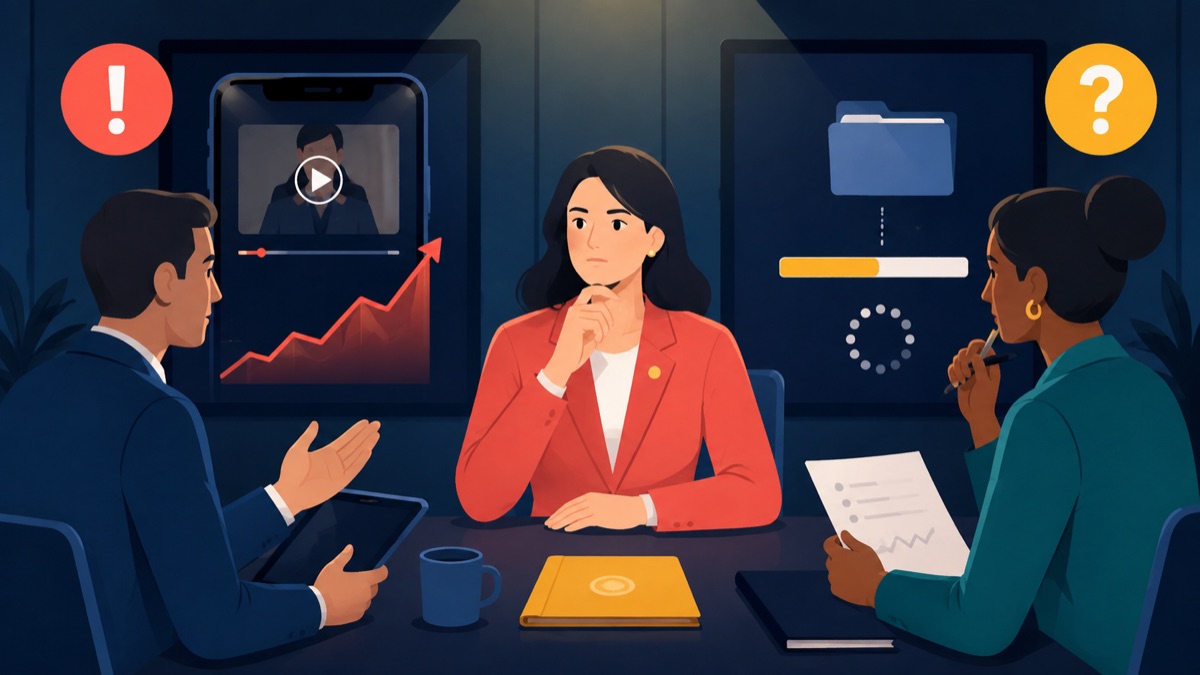
For high-visibility decisions, the record matters as much as the recommendation: what was known, what was inferred, and what would change the answer.
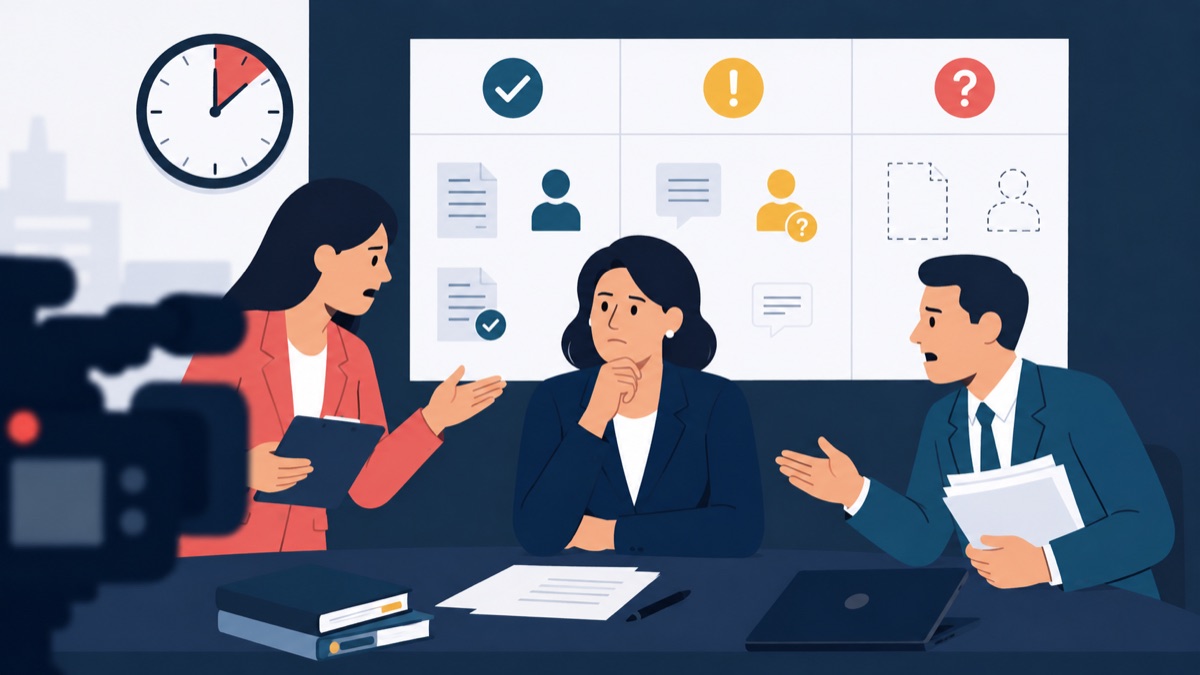
Minerva turns a crowded brief into options, trade-offs, missing evidence, and a human-owned action record.
Illustrations are not customer stories, endorsements, affiliations, ROI claims, or evidence that an external outcome occurred.
Explicit invocation: analysis begins only after the user opens a specific Gmail thread and invokes Minerva.
Source trace: the decision record distinguishes material present in the thread from inference and missing facts.
Visible dissent: alternative interpretations and stakeholder consequences remain inspectable before commitment.
Reversal condition: the recommendation states what evidence or event should cause the decision owner to reconsider.
Human confirmation: the executive can select, edit or reject the recommendation and next action.
Controlled action: Minerva does not search the mailbox or automatically send the reply; the user remains responsible for external action.
The evidence library contains 50 independent teaching simulations run through the actual Minerva Decision Room. The named consulting firms are public-source references, not Minerva customers or endorsers.
No. It reconstructs context, separates evidence from inference, challenges the recommendation and records reversal conditions. The executive selects, edits or rejects the recommendation and owns the action.
For the Gmail add-on flow described here, Minerva uses the current thread the user explicitly opens and invokes. It does not search the wider mailbox.
No. They are independent teaching simulations based on public sources and actual product runs. They do not claim affiliation, endorsement, customer outcomes or ROI.
Where it fits:Minerva reads only the Gmail thread the user deliberately opens and invokes. It does not search the mailbox, decide autonomously, or send an external action without the human user.
Evaluate Minerva by whether it makes uncertainty, disagreement and ownership more visible—not by whether it sounds confident.
MINERVA DECISION READINESS REVIEW
Minerva separates evidence, inference and unknowns, then shows options, the strongest objection and what would reverse the recommendation.
Start a Minerva Decision Readiness ReviewBring a real, de-identified decision. Google sign-in and product access are required; your plan and Decision Credits apply. You remain the decision-maker, and no email or external action is sent automatically.