
Crisis response with a pause point
When pressure rewards speed, Minerva gives the team a place to inspect evidence, dissent, reversal conditions, and who owns the next move.
For executives · Daily workflow
Current product policyLast updated September 30, 2026
The tool does not introduce a new management ritual. It turns the selected discussion you already have into a decision record, an explicit uncertainty check and a human-owned next step.
Scenario illustrations
These synthetic role scenes make the decision tension easier to scan. The proof still comes from product videos, localized screenshots, transcripts, and preserved run receipts.
When pressure rewards speed, Minerva gives the team a place to inspect evidence, dissent, reversal conditions, and who owns the next move.
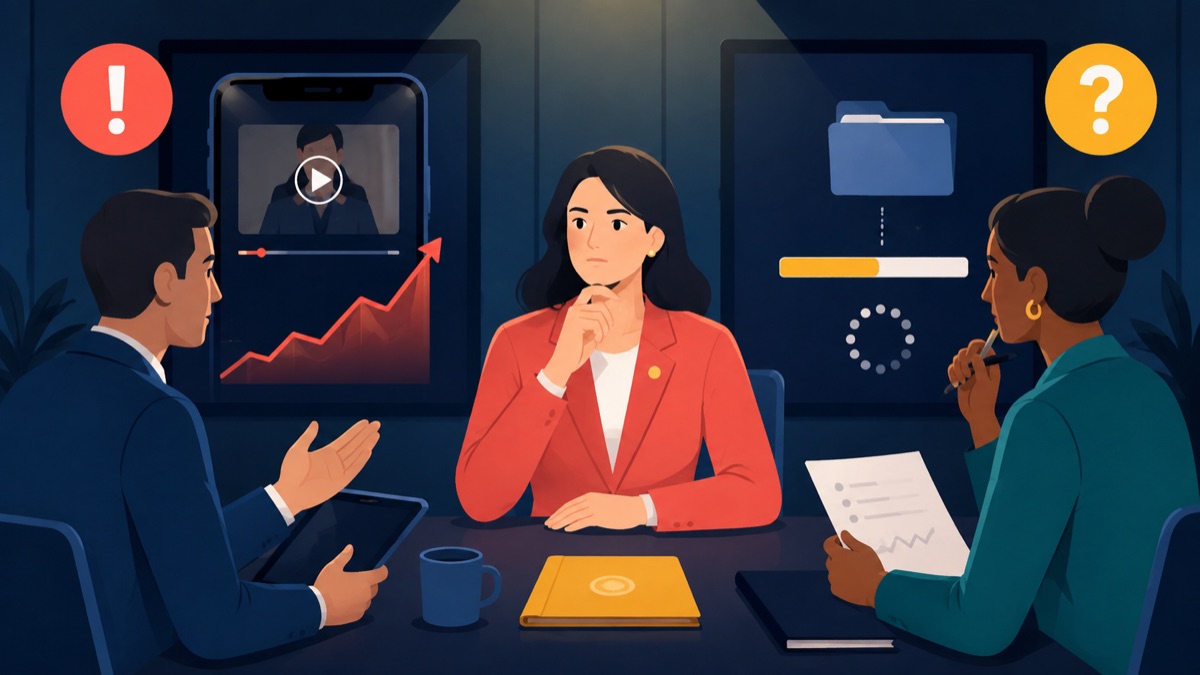
For high-visibility decisions, the record matters as much as the recommendation: what was known, what was inferred, and what would change the answer.
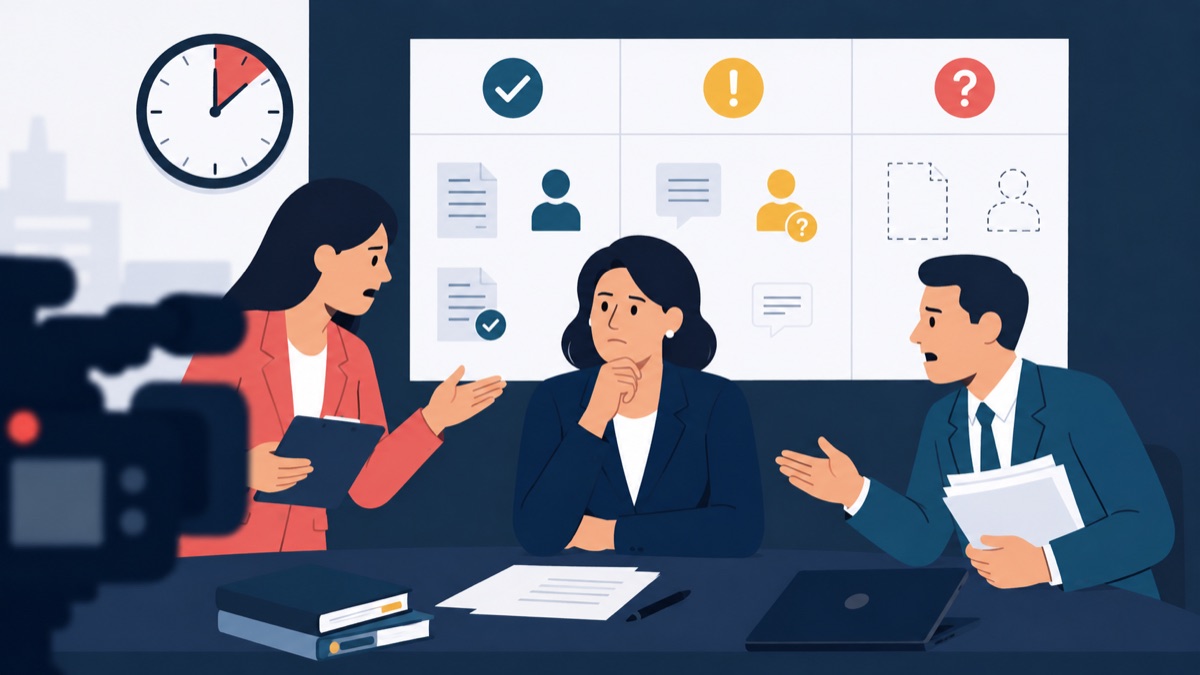
Minerva turns a crowded brief into options, trade-offs, missing evidence, and a human-owned action record.
Illustrations are not customer stories, endorsements, affiliations, ROI claims, or evidence that an external outcome occurred.
Priority and resource allocation: identify which assumption makes one initiative deserve people, budget or executive attention now.
Vendor or technology choice: compare options against the real constraint instead of choosing the most persuasive proposal.
Pilot, rollout or stop: define a reversible scope, success signal and stop condition before scaling.
Cross-functional disagreement: separate evidence, incentives and authority so compromise does not hide the unresolved decision.
Crisis response: distinguish immediate stabilization from the later exit decision, with an owner and trigger for each stage.
Organization or succession: preserve multiple options until strategy, readiness and governance evidence justify narrowing them.
The evidence library contains 50 independent teaching simulations run through the actual Minerva Decision Room. The named consulting firms are public-source references, not Minerva customers or endorsers.
No. It reconstructs context, separates evidence from inference, challenges the recommendation and records reversal conditions. The executive selects, edits or rejects the recommendation and owns the action.
For the Gmail add-on flow described here, Minerva uses the current thread the user explicitly opens and invokes. It does not search the wider mailbox.
No. They are independent teaching simulations based on public sources and actual product runs. They do not claim affiliation, endorsement, customer outcomes or ROI.
Where it fits:Minerva reads only the Gmail thread the user deliberately opens and invokes. It does not search the mailbox, decide autonomously, or send an external action without the human user.
Open the thread where the commitment is forming, invoke Minerva, answer the most consequential unknown and keep the final decision in human hands.
MINERVA DECISION READINESS REVIEW
Minerva separates evidence, inference and unknowns, then shows options, the strongest objection and what would reverse the recommendation.
Start a Minerva Decision Readiness ReviewBring a real, de-identified decision. Google sign-in and product access are required; your plan and Decision Credits apply. You remain the decision-maker, and no email or external action is sent automatically.